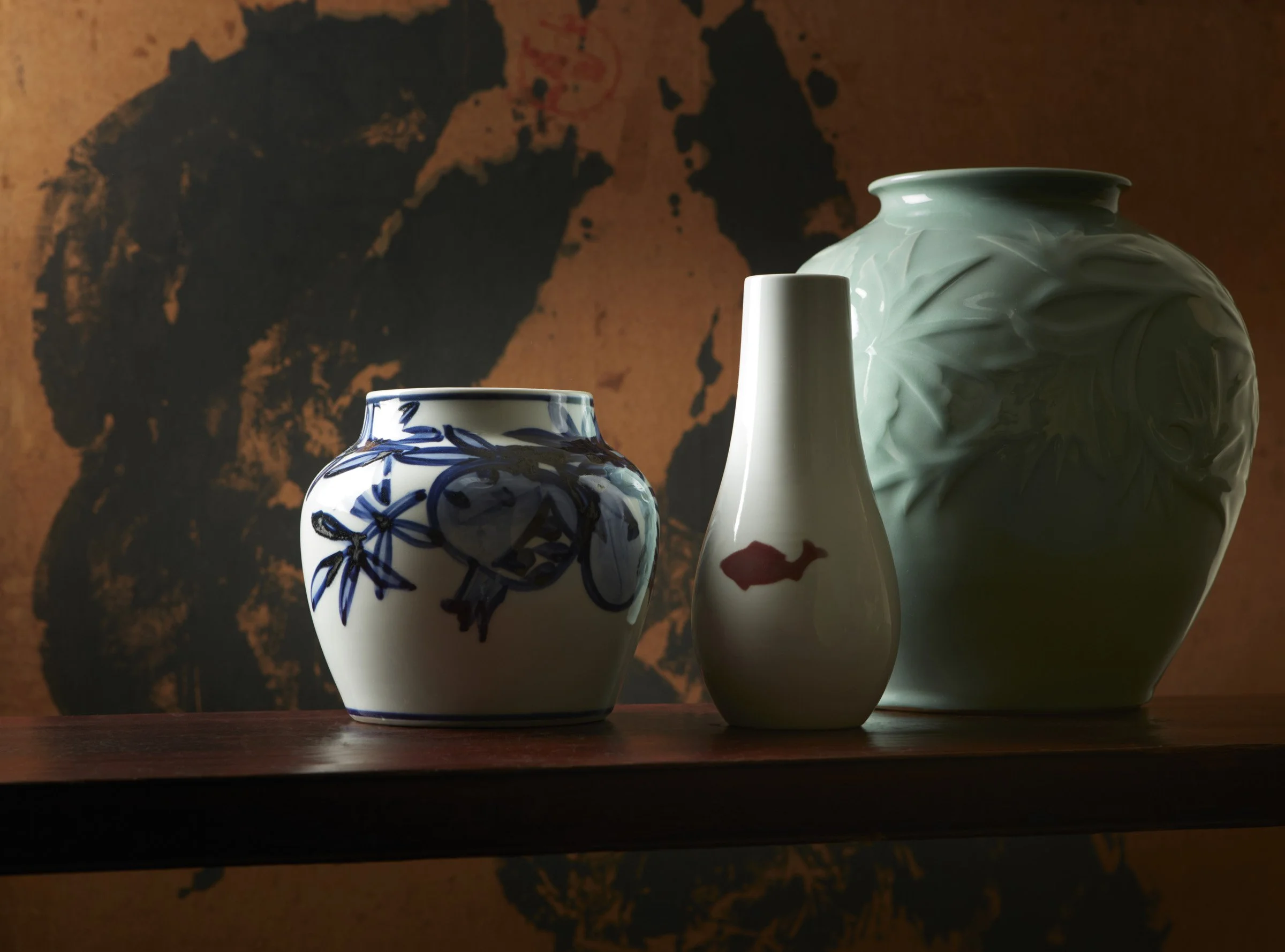
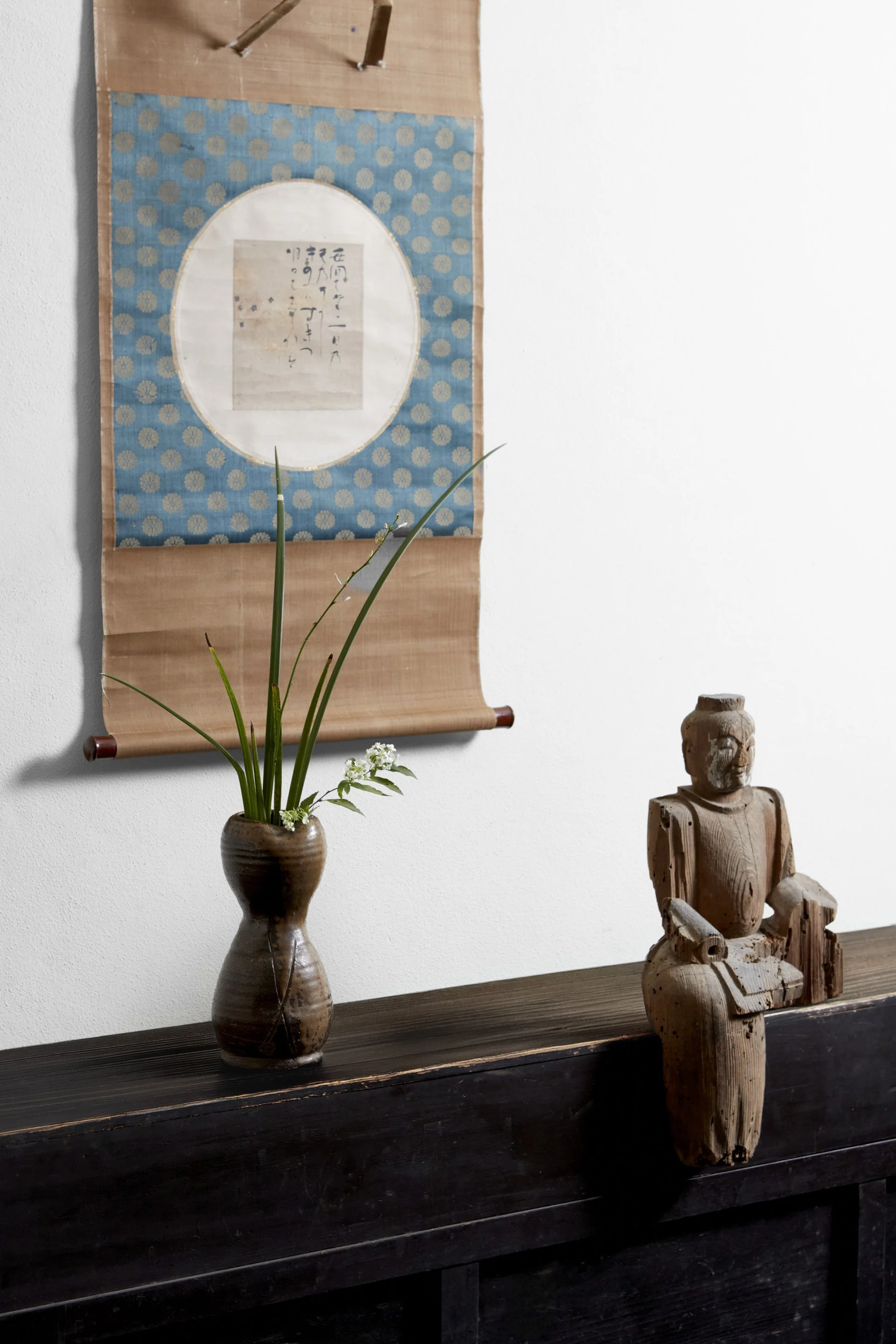
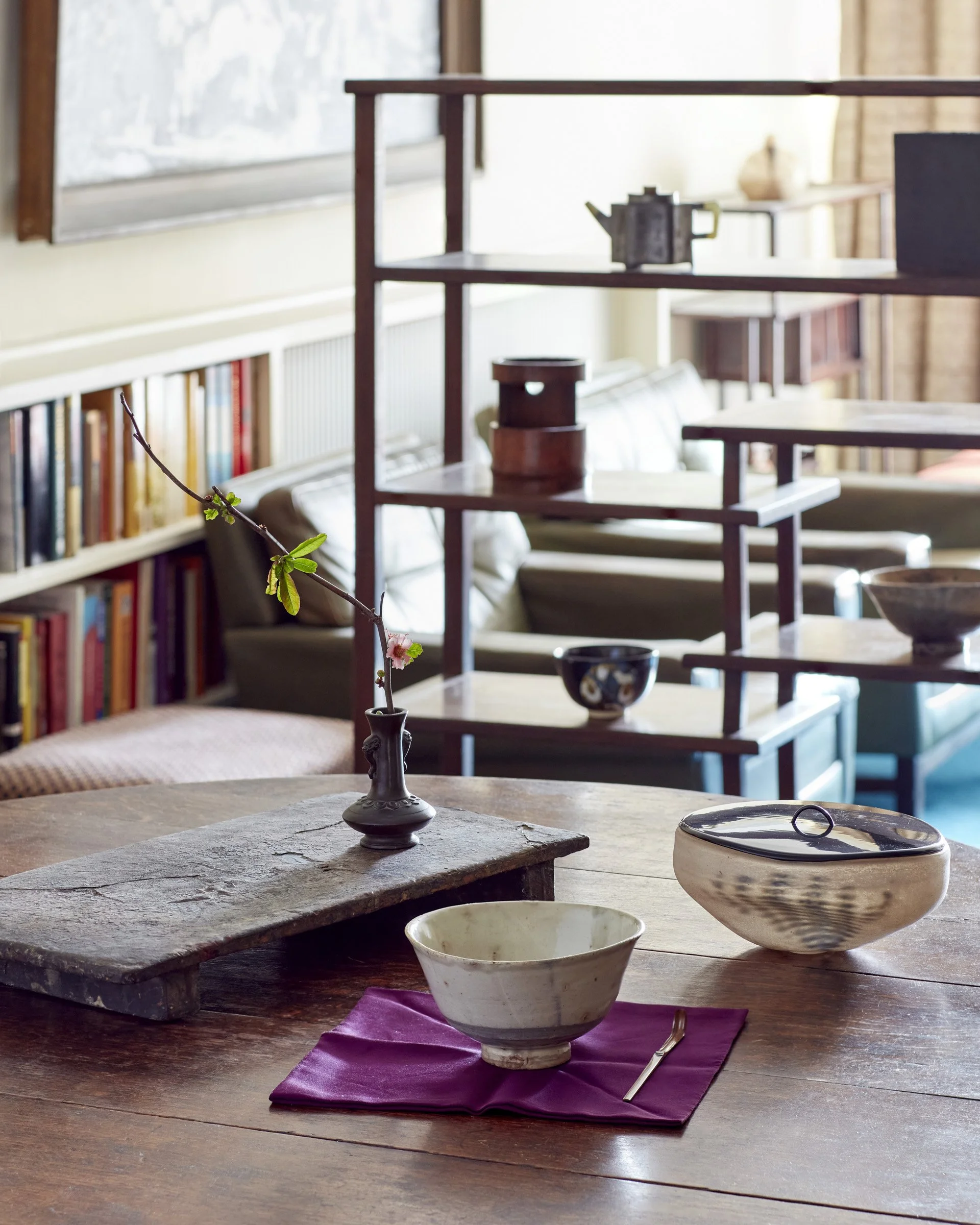
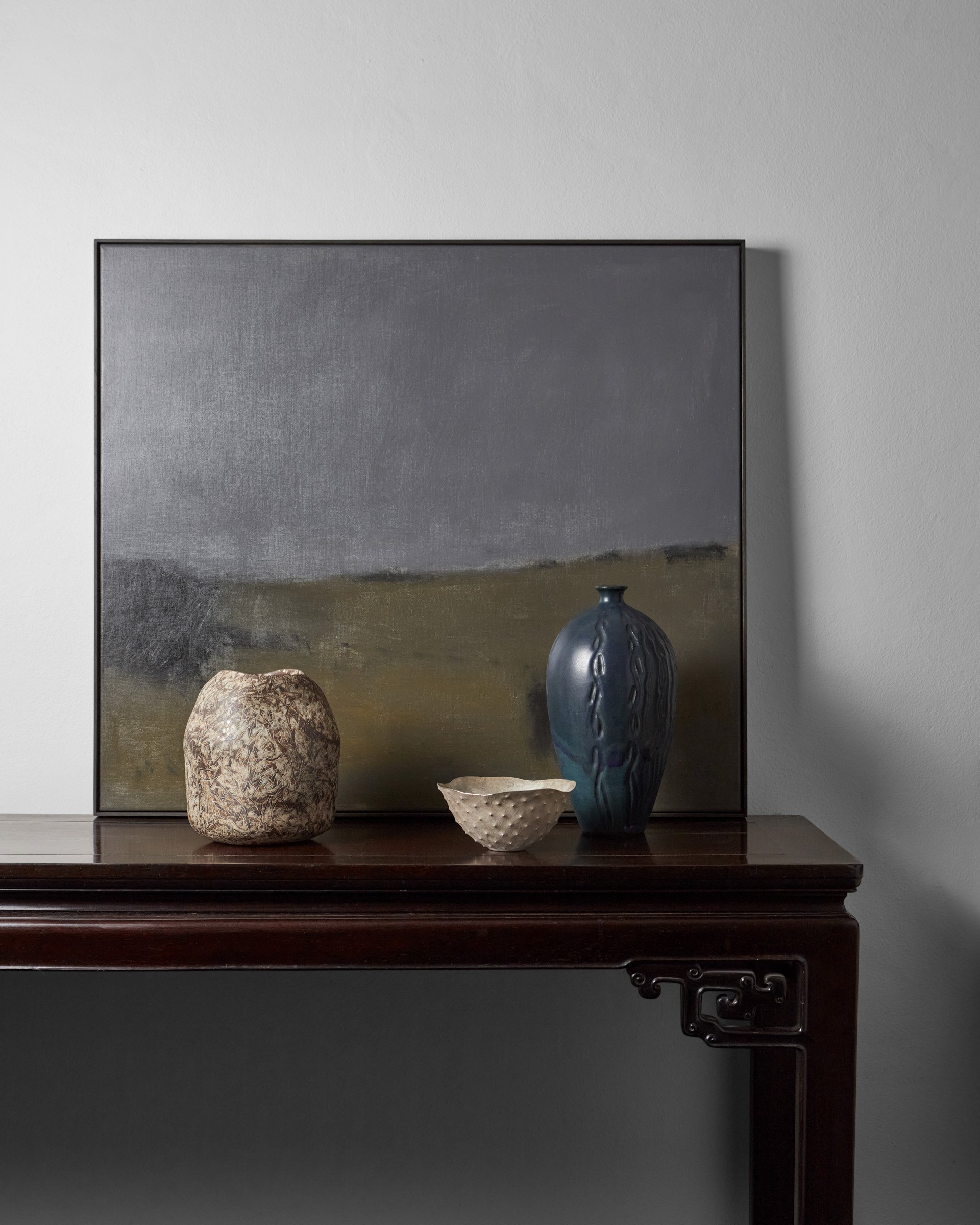
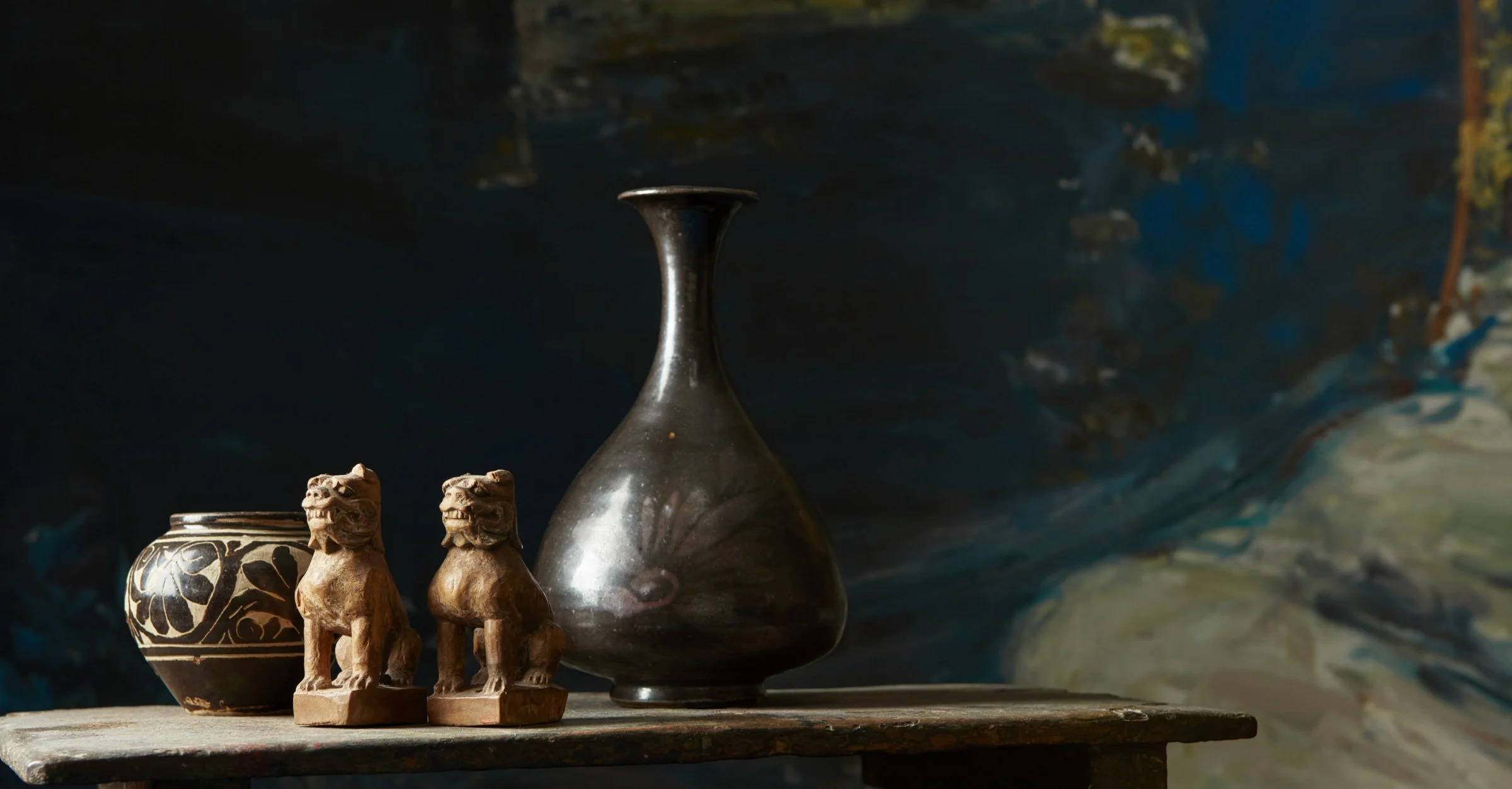
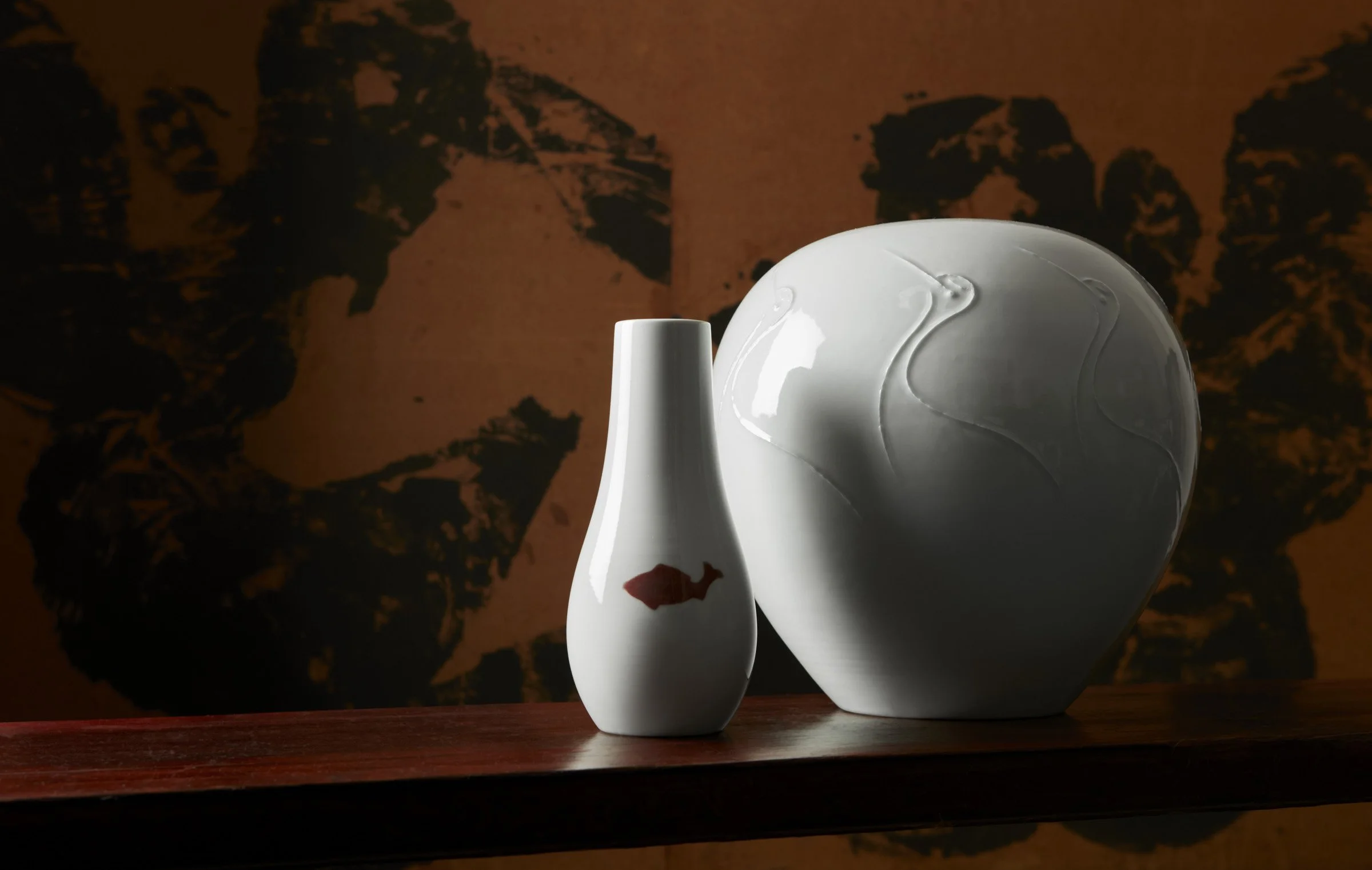
Carl Wantrup Asian Art is a specialist dealer and valuer of Japanese, Chinese, Korean and other Asian arts, offering a carefully curated selection of ceramics, bronzes, cloisonné, sculpture, paintings, screens, scholars' objects, and Japanese tea ceremony arts. With over two decades of expertise, and as a member of the Australian Antique & Art Dealers Association we guarantee authenticity and provide trusted services to museums, universities, and private collectors worldwide.
Featured Works
Jingdezhen, China
Ming Dynasty, Tianqi Period (1627-1644)
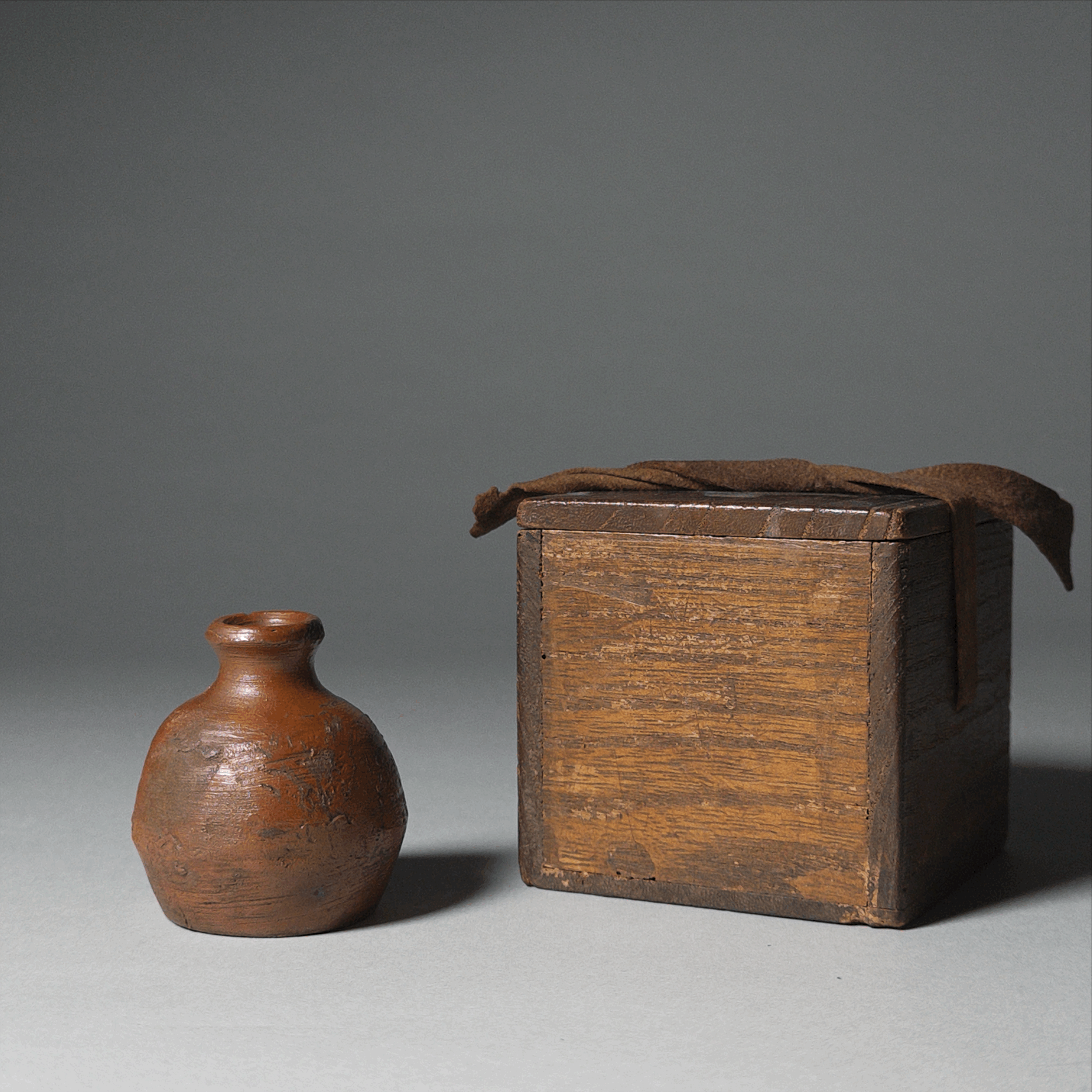
Of tubular form with unglazed slightly recessed base, freely decorated with a lakeside landscape with flying birds in underglaze blue. 11.3cm high, 4.8cm diameter. Together with a finely made old Japanese wooden box with inscription stating this is a brush pot, but it was also likely used as a chakin tsutsu (tubular vessel for holding a white linen cloth for tea ceremony). Cat. 788
Condition: the opening is slightly off-round (firing flaw), flake/chip to the rim, some minor wear to the glaze.
Korea
Goryeo Dynasty (918-1392), c. 12th century
Of beautifully proportioned pear shape cast in heavy, high copper-content bronze (known as sawari in Japan), embellished with four raised horizontal lines to the body and neck, two horizontal incised lines to the shoulder and three within the mouth, with a beaded mouth rim, the rich verdigris patina ranging from deep olive green to brighter coppery greens. 32cm high, 17cm diameter. Together with an old Japanese fitted wooden box.
Condition: three larger dents to one side, and a few much smaller dents to the same side (one side presents perfectly), small oxidative losses around the mouth rim, two areas of professional restoration of the patina coinciding with the three larger dents, and to a horizontal area between the two lowest raised lines.
This example is raised far above the usual examples seen of its type, in the heaviness of the casting (most are very lightly constructed), the particularly graceful proportions, the extra-fine and well-executed details of the raised rings and incised lines, the beaded mouth rim, and the wonderful and mostly intact patina.
Cat. 786
Kyoto, Japan
Meiji Period (1868-1912), c. 1900
Each heavily potted in classic Kyoyaki crackle-glazed stoneware in sculptural drum-form decorated with scattered stylised chrysanthemums reminiscent of the Imperial kiku-mon in raised-slip beneath the glaze, the surrounding leaves in underglaze pigments. Impressed circular seals to both bases. Each approximately 28.5cm high, 27cm diameter.
Cat. 653
Itō Tōzan I (伊藤陶山, 1846–1920)
Tozan I was a leading Kyoto ceramic artist of the Meiji period whose career closely paralleled Japan’s emergence on the international stage. He exhibited repeatedly at major domestic forums, most notably the Naikoku Kangyō Hakurankai (Domestic Industrial Exhibitions), where his works received official commendations, and he was also selected for display at important overseas expositions, including world’s fairs in Europe and the United States that introduced Meiji ceramics to a global audience. Tōzan distinguished himself through the sophisticated adoption of newly developed overglaze enamels, underglaze pigments and firing techniques, achieving refined colour effects which accentuated his striking art nouveau-influenced but quintessentially Japanese designs, making his work suitable for both exhibition and imperial standards. In recognition of his artistic achievement and his role in advancing Japanese ceramic design, he was appointed Teishitsu Gigei-in (Imperial Court Artist), affirming his status among the elite makers of his time.
Kyoto, Japan
Showa Period (1926-1989), c. 1960s/70s
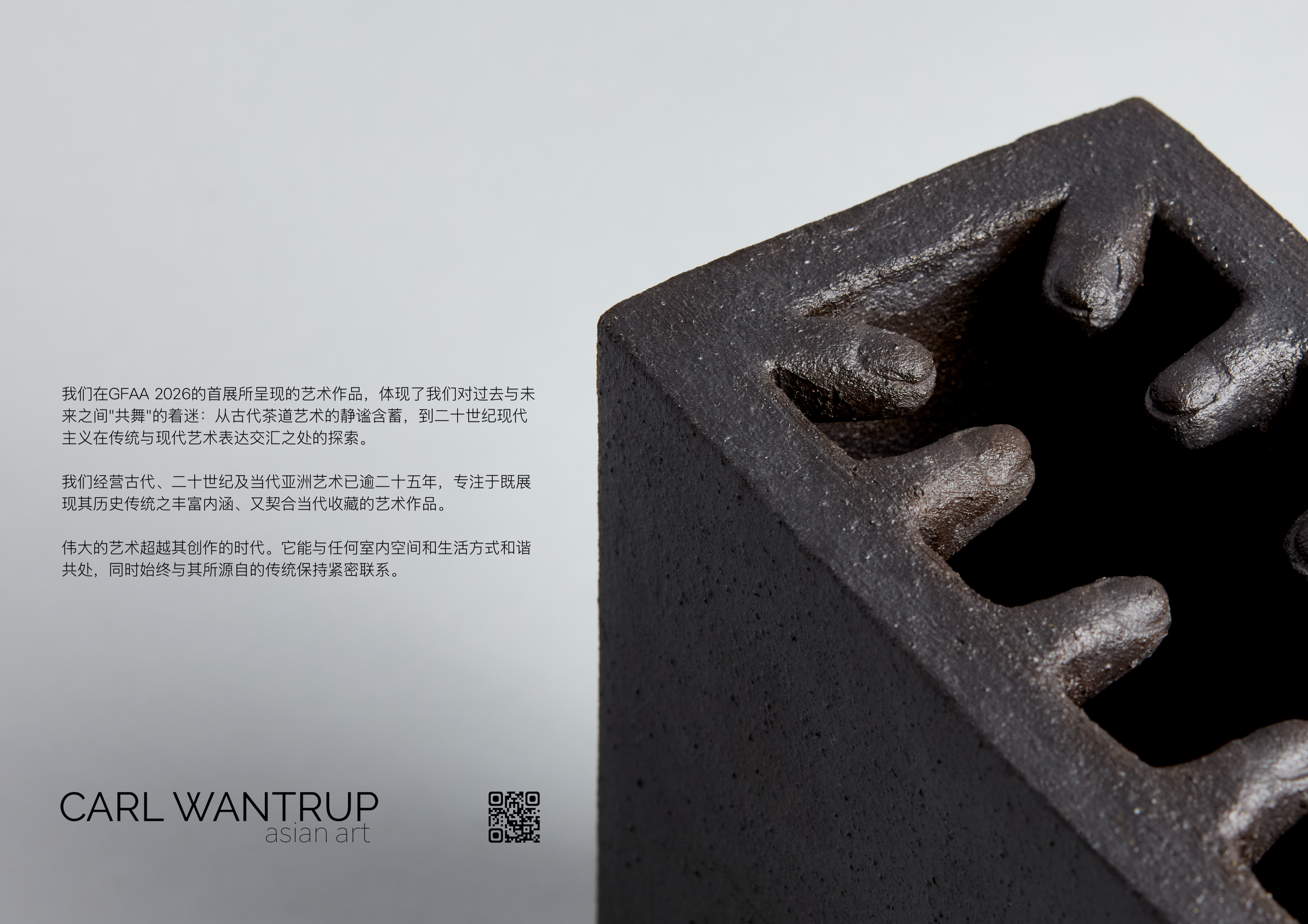
Of rectangular-cuboid form in stoneware with a row of fingers pointed inwardly around the mouth in Junkichi’s inimitable style, covered in a matt deep brownish-black iron glaze, impressed mark to the base. Together with its signed tomobako. 15.75cm high, 16.25cm wide.
Cat. 436
Kumakura Junkichi (1920-1985)
Kumakura graduated from the Kyoto Institute of Technology in 1942 and then in 1946 became assistant to Tomimoto Kenkichi (1986-1963) who strongly influenced his approach towards ceramics as fine art. In 1955 he won the inaugural Japan Ceramics Association prize which cemented his reputation. In 1957 he joined Sodeisha and was to become a leading participant in that movement with his decidedly sculptural ceramics. Influenced by the notions of jazz music his work became more sculptural, often with overtones of eroticism and sexuality, as he got older. His success with the Japan Ceramics Society led to invitations to major international exhibitions where he was awarded the grand prize at the Brussels World Exposition in 1958 and the silver prize at the International Ceramics Exhibition in Prague in 1962.
Vietnam
Tran Dynasty (1225-1400), 14th century
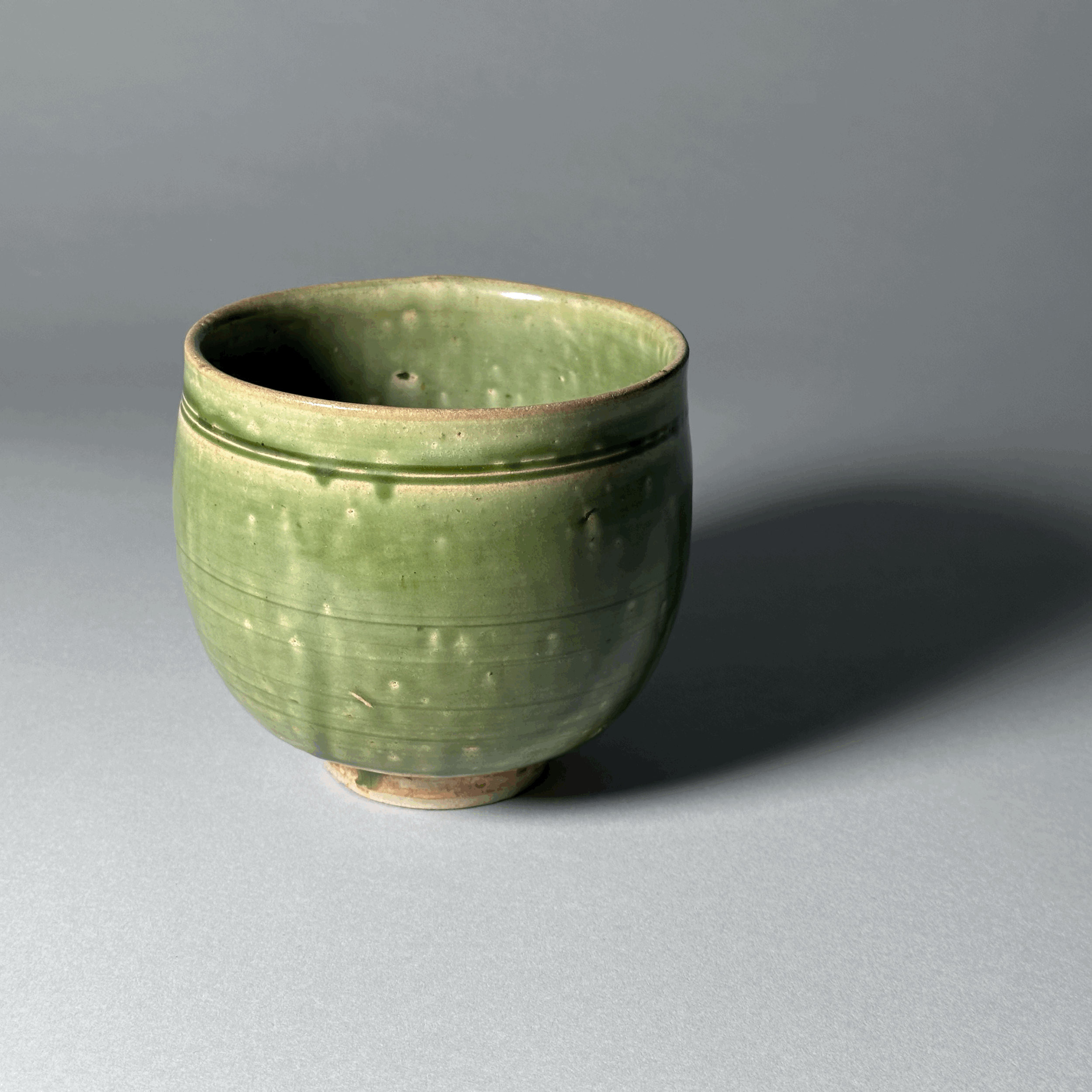
Thickly potted high-fired stoneware with an incised double line below the mouth, covered in a vibrant apple-green coloured glaze. 12cm high, 13cm diameter. Together with a Japanese wooden box.
Cat. 146
Condition: magnificent, with no glaze loss, only a small area of glaze crazing at the base above the foot, and an excellent ring when lightly tapped. Being successfully high-fired and with a perfectly intact glaze with rich and beautiful green colour, this ceramic is one of the best examples of its type that I have seen and handled, as is often the case with Southeast Asian ceramics from old Japanese collections.
Reference: for examples of the same type, please see:
John Stevenson and John Guy, Vietnamese Ceramics: A Separate Tradition, cat. no. 164.
Dick Richards and T.S. Loh, Vietnamese Ceramics from the Yi-Lu Collection, cat. no. 112